



2) - What Is Your Data Capture Like?
Which means how effective and accurate your data Capture is. When we talk about data capture, we are talking about patient demographics, their insurance information, all of the information that we need as a provider office to transmit the claim to the insurance carrier successfully.
You want to make sure that you have very effective and error free data capture process and you are doing your best to have that be as efficient as possible. Although mistakes can happen, but to avoid such issues you can utilize tools like eligibility checking. Eligibility tools can be added onto your PMS (Practice management software) to ensure that if there is a manual entry taking place you do not have any human errors. Also, software can communicate with insurance carrier through automatic eligibility as software send the data through the insurance carrier site.
3) - How Long Is It Taking You To Close Or Reconcile Your Day?
This means, after the provider of services has entered and finalized their SOAP ( A more efficient and structured way of recording and assessing patient condition) notes or their daily documentation for the day, how long is it taking your team to go back through reconcile the day, confirm patient’s charges, and moving into the software accurately?
A lot of times, providers requires lengthier time to close out their documentation for the day. This is Problem number one, and once that happens, once they finally close that then they have someone in house to get caught up on reconciling may be cashing out a process of a cash control in house. May be making sure that all of the patients that were seen that day have visits that were properly closed out within the software and there might be a after visit coding review happening as well.
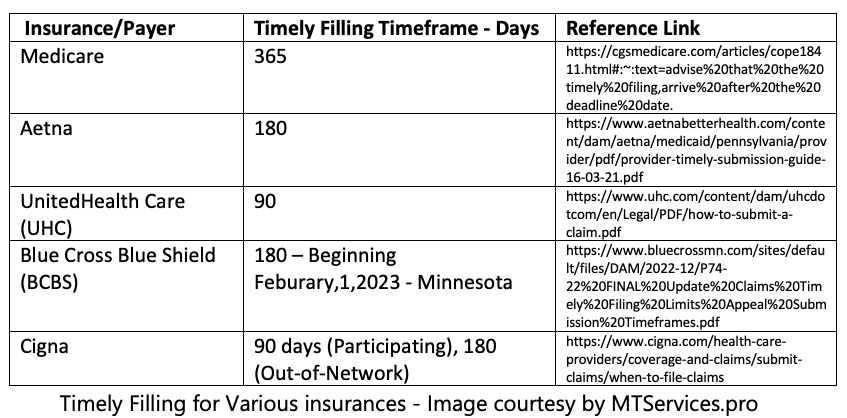
All of those thing specially in the environment where there might be surgeries, provider may take lengthy amount of time to close out their encounters, or bring those encounters back to their office which adds another week or two. Then reconciliation of that data which adds another week, so we end up with three weeks away from the date of service (DOS - The actual date on which health care services were provided to the patient by a doctor or hospital). So once you get the claim out of the door and you have got a 30 days timely filling and 21 days you have lost in just getting the claim ready then you have to worry about the accuracy of data capture which is again one of the top reasons of denial.
It is very important to think about the speed in which things are moving through your Revenue Cycle to ensure that you do not have to put more of a bottle neck to or cause more of an issue that you might have problems down the line with so.
4) - What Is Your Current First Pass Claim Rate or Clean Claim Rate (CCR)?
First thing to think about if you are not at 95% or higher which means atleast 95% of your claims are going through to the insurance carrier on the first time then you have some work to do. Although the target should be 98% for CCR.
5) - What Tools And Software’s You Use?
You need to look and determine how you can make the RCM more efficient. What tools and software can help minimize the denials. First you look into number 1 and number 2, we just looked into and then you are going to make sure that you have a proper claim scrubber, that is one quick solution, that can help improve what is happening that might be kicking your claim back out.
So very easily, Eligibility – that problem 1, making sure that there is a close out with provider of services and someone in house maybe a coder is reviewing your services – Number 2, and then layering on top of all a claim scrubber which might be looking at your CCI edit, it might also be looking at just basic elements where with Medicare maybe you have a specific modifier that you require to use or specific CPT code or HCPCS code in lieu (in place of) of a CPT code which is very common.
Other Considerations
Anything which might be unique to a carrier/payer or insurance companies, many claim scrubbers can catch that and avoids getting denied at payers or payers clearing house.
You want to make sure that your first pass claim rate or clean claim rate (CCR) is as high as possible, that will make sure or ensure that your claim is atleast making it into the insurance company clearing house ideally gets claim directly into the Adjudication where the claim is going to get processed. Also it is important to know what EHR (Electronic Health Record) software you are using? Some EHR requires you to complete the progress note and require certain fields to be completed before the claim can be submitted.
Conclusion
Keeping updated with payer guidelines and timely filling timeframes is critical. Secondly, the more efficient RCM system you have with different tools such as claim scrubbers, EHR softwares, web portals and how quickly front desk close out the day will impact your timely filling. But most importantly, the practice should always try to submit the claim within 30 days from DOS irrespective of timely filling timeframe for each insurance.
We at MTServices has the mechanism to ensure that your claims are dealt in timely manner and no claim is time barred. If you would like your claims to be handled more efficiently, please contact us at info@mtservices.pro


